

B.L.T
Brookies Love This - My go to brook trout fly

A couple of years ago my good friend Drew Price asked me to submit a few flies for a book he was writing for Stackpole Press. Well that wonderful book is now in print and is called Favorite Flies For Vermont. I was lucky enough to have two flies included. Below is the verbiage I submitted for one of those patterns, the B.L.T my all time favorite brook trout fly.
There’s a certain kind of brook trout fishing that strips things down to their essentials. High summer. High drainages. Small fish with big attitudes. Places where the trail fades out and the only real decision you make all day is whether to cast upstream to the right or the left. That’s the world the B.L.T. lives in.
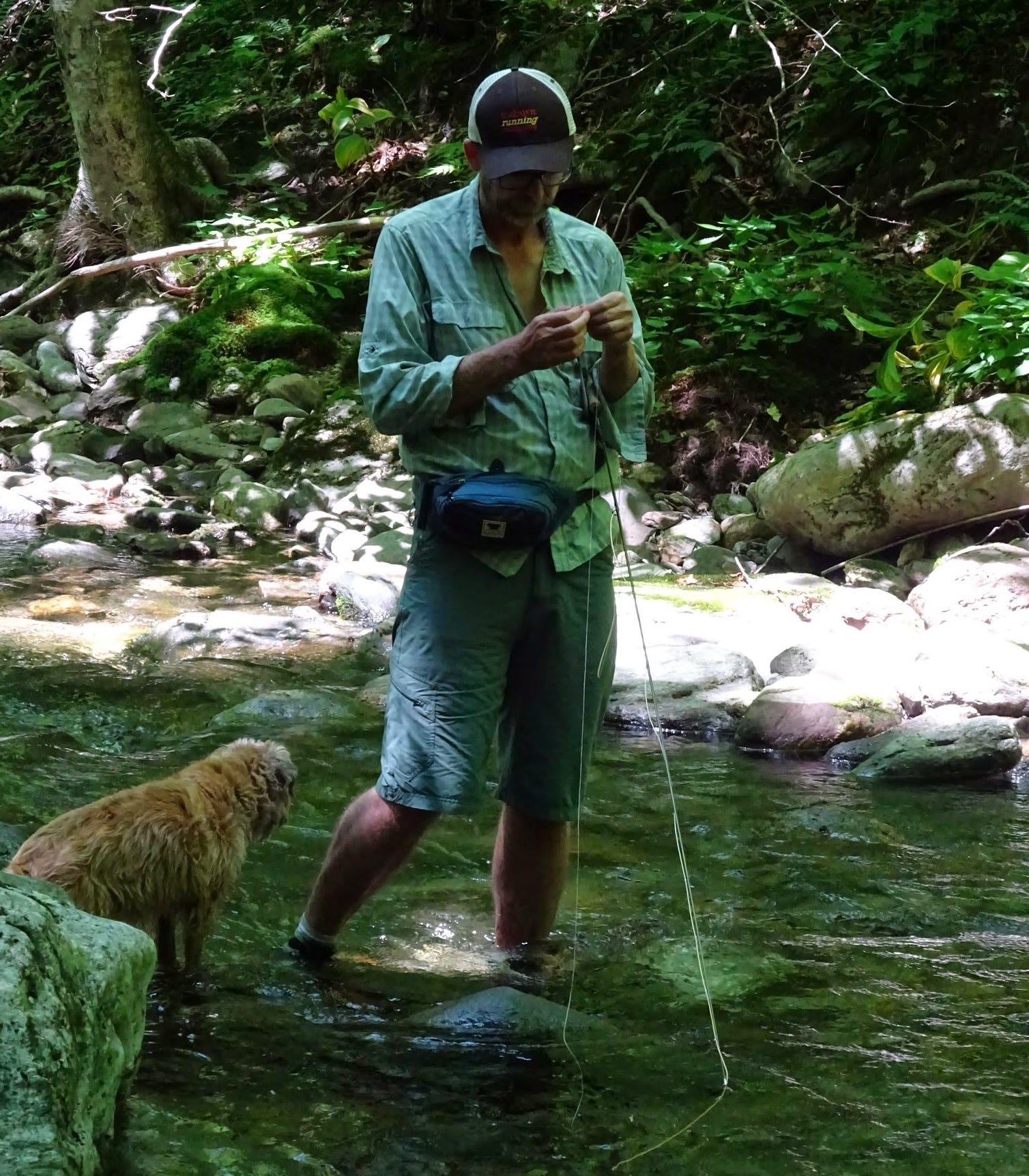
I’ve always gravitated toward that kind of fishing—untapped headwaters, minimal gear, and a deliberate refusal to complicate things, it’s kind of the alpine climbing style of fishing - light, fast and far from the madding crowds. I rarely fish nymphs, streamers, or hopper-dropper rigs in these situations. For me, this is dry-fly country, plain and simple. The goal is continuity: release a fish, make the next cast, and be tight again without stopping to fuss with floatant, split shot, or extra knots.
Ninety percent of the time, the fly on the end of my leader is the B.L.T., most often in black, olive, or tan. I’ll change colors occasionally, usually to suit the light so I can see the fly better, but I’ve also learned that when things slow down, a simple color change can be enough to reset the equation and get fish eating again.
The pattern itself is intentionally uncomplicated, but every choice is deliberate. Unlike many foam dries, I don’t fold the foam over the hook or tie it down at multiple points. On small flies, that approach tends to compress the foam and rob the pattern of flotation. Here, the foam remains unflattened, creating plenty of surface contact so the fly rides high and stays there.
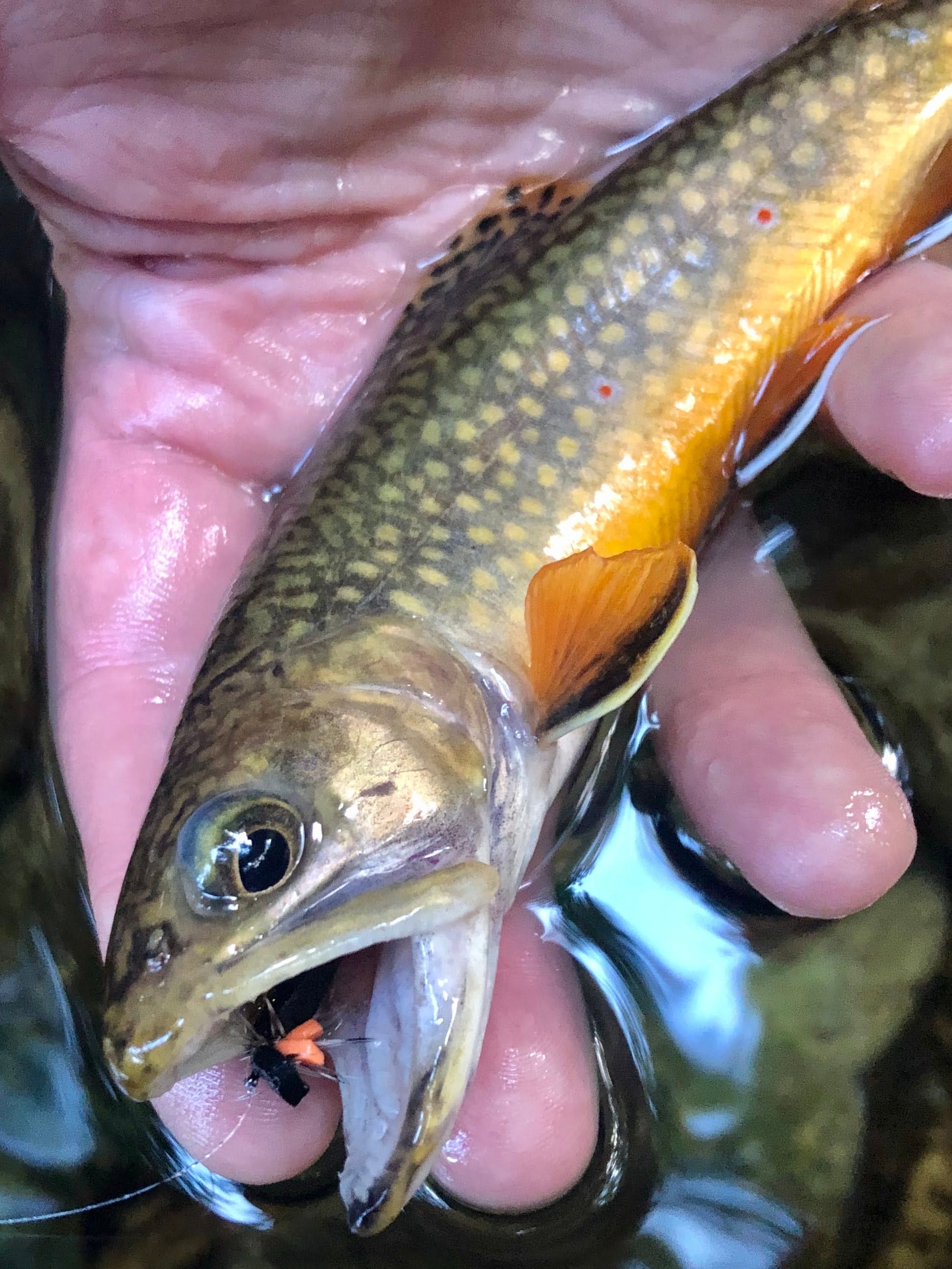
The hackle is trimmed flat on the bottom, acting as a stabilizer so the fly always lands correctly. That detail matters, especially when most of the fish are small. A full hackle can interfere with clean hook-ups on tiny mouths; the trimmed hackle avoids that problem without sacrificing balance or presentation.
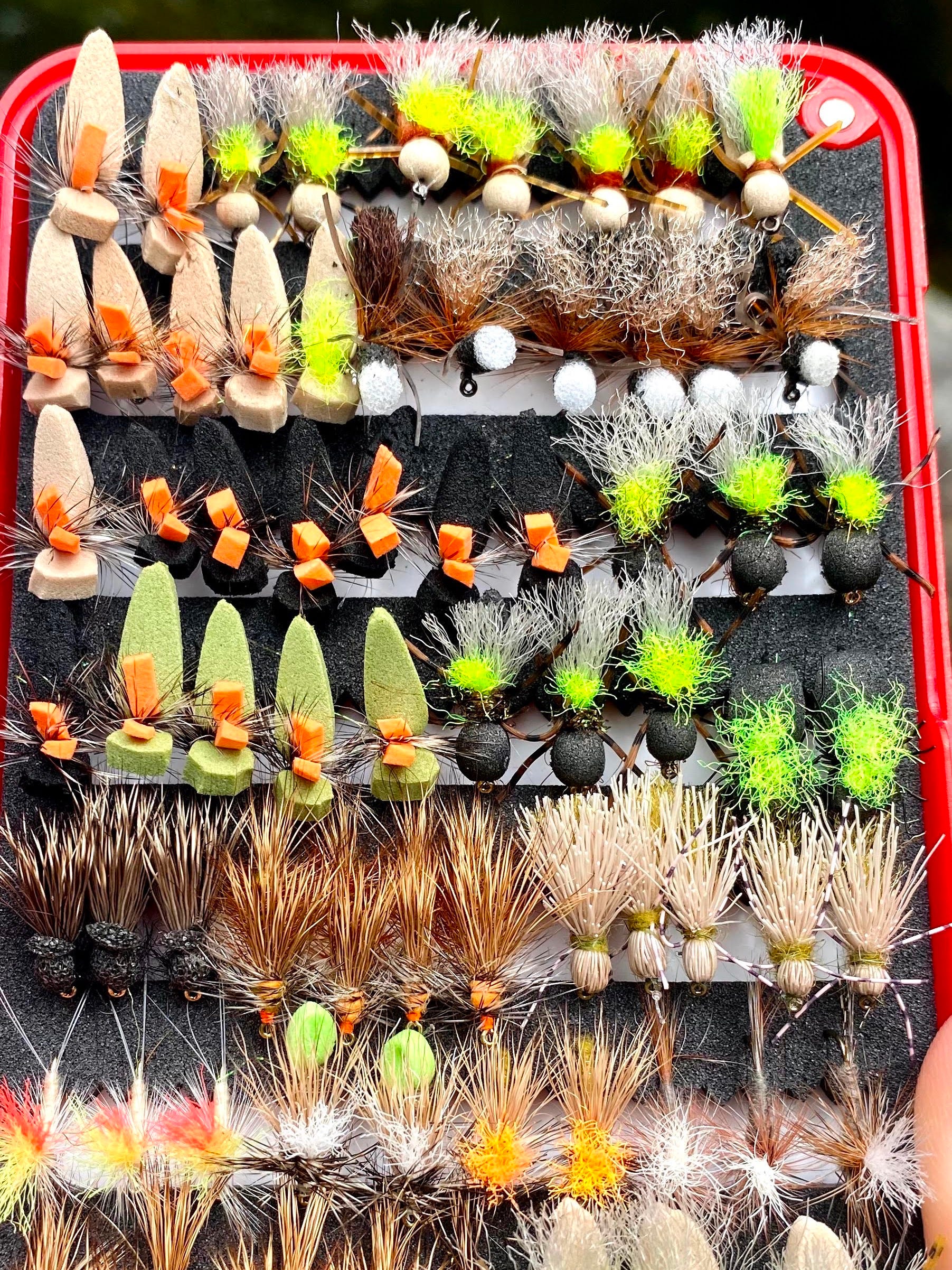
The foam sighter post is another practical choice—one more way to eliminate the need for floatant and keep the whole system simple. The fly floats, stays visible, and keeps doing its job fish after fish, cast after cast. That’s really the point of the B.L.T.: a fly designed for long stretches of uninterrupted dry-fly fishing in places where brook trout still feel wild
Tying Instructions
Hook: Size 12 dry fly barbless hook
Under Body: Olive Spectra dubbing (used regardless of foam color)
Over Body: Foam strip, one hook gap wide, trimmed to a rounded point at the rear (black, olive, and tan are primary color choices)
Sighter: Thin strip of orange foam
Hackle: 2–3 wraps of grizzle hackle, trimmed flat on the underside
Head Cement: Super glue applied lightly to the underside where the hackle is trimmed, and a very small amount at the head to seal the structure.