

The Scare Force Days
Surviving the early days of paragliding in North Conway, NH.

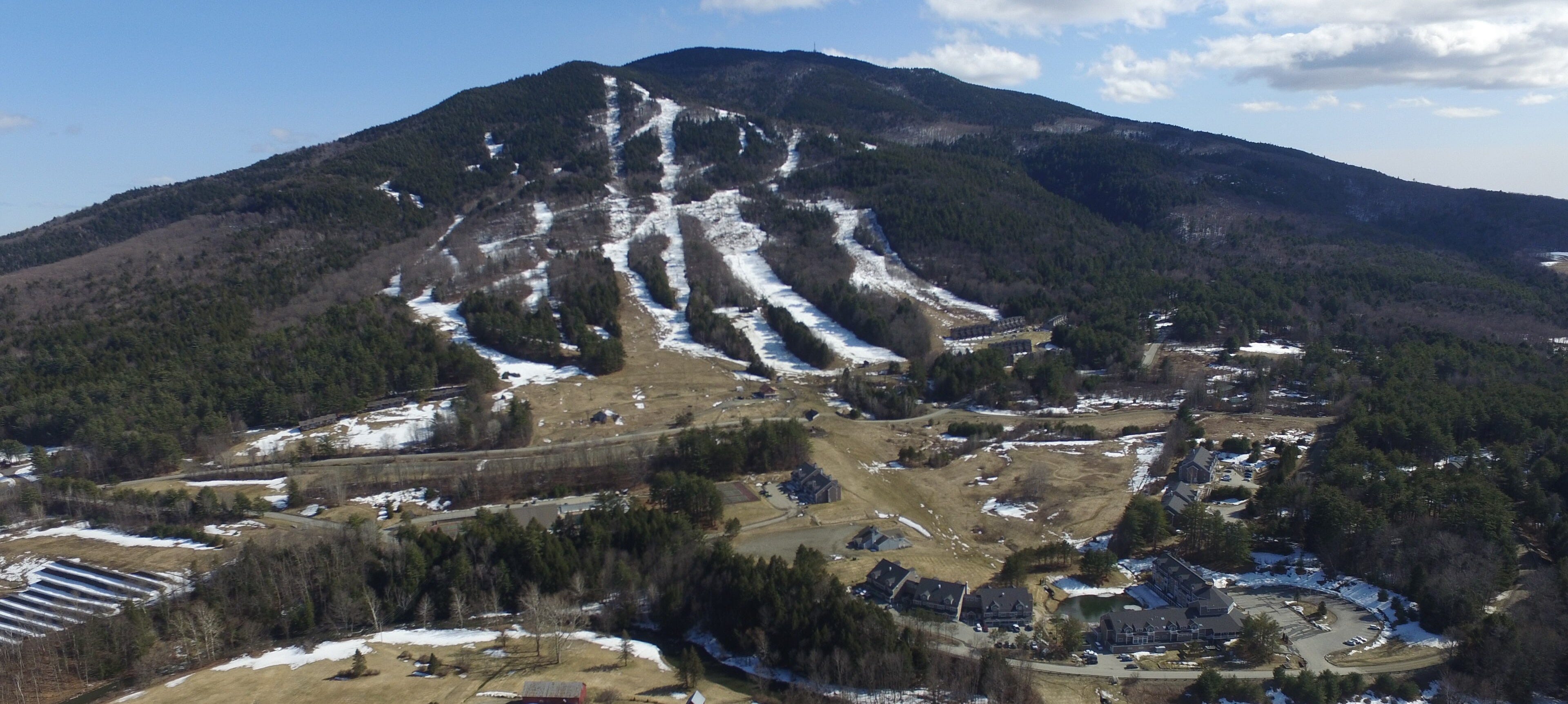
These days I live at the base of Mount Ascutney in southern Vermont and frequently hike the old ski trails in the summer for a little exercise. Near the summit, where an old chairlift once stood, is a beautiful little meadow with wonderful views to the north. On a clear day I can pick out Franconia Ridge, Mount Washington, Camel’s Hump and Mount Mansfield.
The first few times I hiked up there I remember thinking, What a perfect place to launch a paraglider.
I wasn’t the first to have that thought.
On later hikes I discovered it was already a popular launch site. These days I often arrive to find a gaggle of friendly and passionate pilots laying out wings, checking weather, clipping into harnesses and then, one by one, disappearing silently into the sky. They soar for what seems like hours.
I usually sit on my favourite rock for a while and chat with a few of the regulars I’ve come to know. Eventually the conversation turns to how we used to do things back in North Conway in the late 1980s, when John Bouchard came back from Chamonix completely fired up about paragliding.
John’s vision wasn’t simply to fly for the fun of it. His goal was to use paragliders as a climbing tool. Climb the route, reach the summit, then fly off and avoid the long, difficult, crevasse and avalanche-ridden descents that could take hours, sometimes even days. To that end he established Feral Corp alongside Wild Things, started manufacturing paragliders in the USA and importing others from France.
As I sit on my designated rock at Ascutney today, I marvel at how different the sport has become from my brief time in Bouchard’s “Scare Force” back in the late ‘80s.
Today’s harnesses look like reclining chairs. Everyone carries a radio. Variometers chirp quietly from chest straps. Cell phones are checked for the latest weather, GPS units track every flight, and friends and family can follow pilots in real time. Virtually every recreational pilot carries a certified reserve parachute, every wing is EN certified, and every pilot works their way through the USHPA ratings from P1 Beginner to P5 Master. Nobody flies alone. There are always at least two pilots at launch.
The biggest difference I notice, though, has nothing to do with the equipment.
Today’s pilots fly because they simply love flying.
Back then almost every pilot was a climber. We’d all drunk the Kool-Aid John was serving and genuinely believed that one day lightweight paragliders would become another tool in the alpine climbing kit. Looking back, it sounds a little far-fetched. At the time it seemed perfectly logical.
John was constantly tinkering with new wing designs, which meant the rest of us could buy “seconds” from Feral Corp at a fraction of the retail price—the only way dirtbag climbers like us could afford to get into the sport.
From a distance the wings of yesterday don’t look all that different from today’s, but the reality is they’re worlds apart. Our wings had seven to nine cells. Today’s have fifty to seventy. Glide ratios back then were around 4:1 or 5:1 and felt more like 3:1. Today’s wings have 9:1 or 11:1.
Definitely more about flying than plummeting.
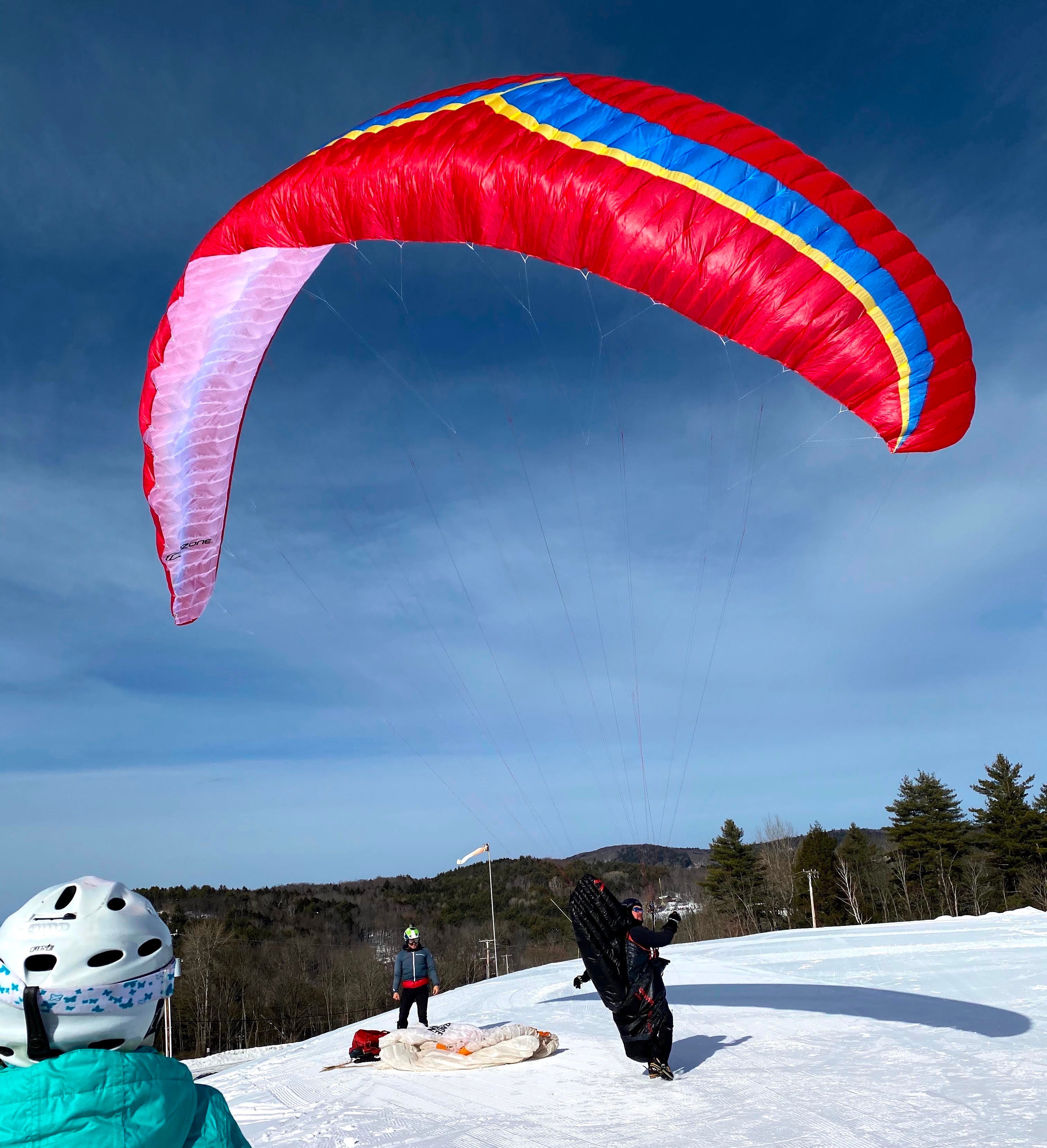
I bought one of John’s seconds and headed over to King Pine Ski Area in Madison to meet a few of the more experienced fliers of the day—they’d all bought their wings a couple of weeks before me.
Under the watchful eye of Rick Wilcox and a few others I hiked up the ski slope, laid out my wing, clipped it to my climbing harness and ran downhill as fast as I could while pulling the wing overhead.
As if by magic my feet left the ground.
The flight probably lasted less than ten seconds and I was only a few feet off the ground.
I was completely hooked.
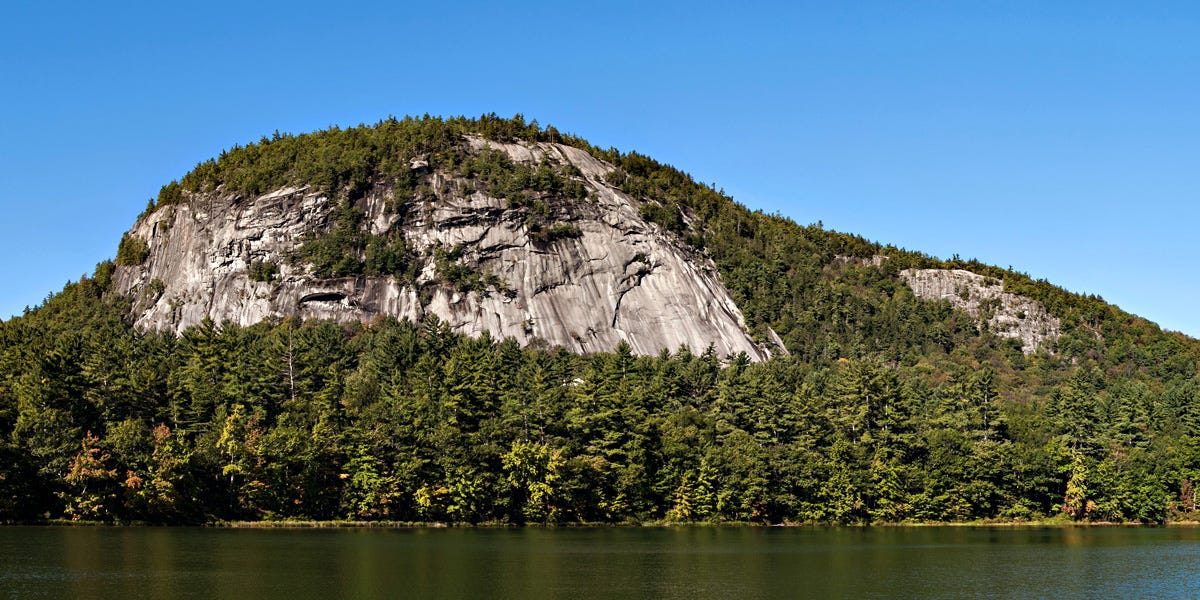
Early the next morning I packed the wing into my climbing pack and drove to the base of Whitehorse Ledge.
I told nobody where I was going.
I slipped on my climbing shoes and soloed Sliding Board to the summit. Once on top I swapped rock shoes for sneakers, clipped into my climbing harness and laid out the wing. I connected the risers via a couple of locking carabiners to a pair of shoulder length climbing slings girth hitched to the belay loop of my harness.
That was the system of the day - no foam backed recliner seats here.
With a whole ten seconds of flying experience under my belt, I waited for what I thought was the right moment, pulled the wing overhead and started running.
Luck gave me a perfect upslope breeze.
Before I really knew what had happened I was soaring out over Whitehorse with a thousand feet of granite hanging beneath my sneakers.
This was definitely in the days when “plummeting” described the experience better than “flying.” That became increasingly obvious as the treetops below started getting closer and closer.
Beginner’s luck stayed with me.
I managed to clear the trees, drift out over Echo Lake, make a gentle turn, flare the risers and land remarkably smoothly on the sandy beach.
I scared the hell out of a couple walking their dog.
I was useless for the rest of the day. Completely wired. I couldn’t concentrate on anything else. It was the most incredible feeling I’d ever experienced.
I knew immediately this could become a very serious addiction.
The next couple of years were wonderfully chaotic, and our little group definitely lived up to the nickname “The Scare Force.”
Unofficial members like Joe Lentini, Dave Karl, Andy Tibbets, Jim Ewing, Mark Twight, Rich Baker, Jimmy Surette and others suffered broken bones and spectacular tree rescues.
It all seemed to come to a head on what became known as “Sunday Bloody Sunday,” when so many pilots crashed into Echo Lake that the lifeguards begged everyone to stop flying
That probably should have told us something.
It didn’t take long for me to see the writing on the wall.
Truthfully, I missed after-work climbing with my buddies Andy Ross, Chris Gill and Jerry Handren more than I loved flying.
I sold my wing to Dave Karl for $400 and returned to climbing full time.
Not long afterwards, Dave broke both ankles flying off Whitehorse.
One afternoon while guiding on Whitehorse I happened to look up just in time to see John Bouchard auger into the slabs while testing a new prototype that had been rigged with the wrong lines. I left my bewildered client standing where he was, ran up the slabs and helped John down. Bruised and battered, he was still able to drive himself to the emergency room, so I got a full day of guiding in, but the sight of John hitting hard had me shuddering all day.
It was a wild and chaotic time, one most of us are very glad we survived.
But amidst all the mayhem there is one remarkable story that perhaps justifies the madness.
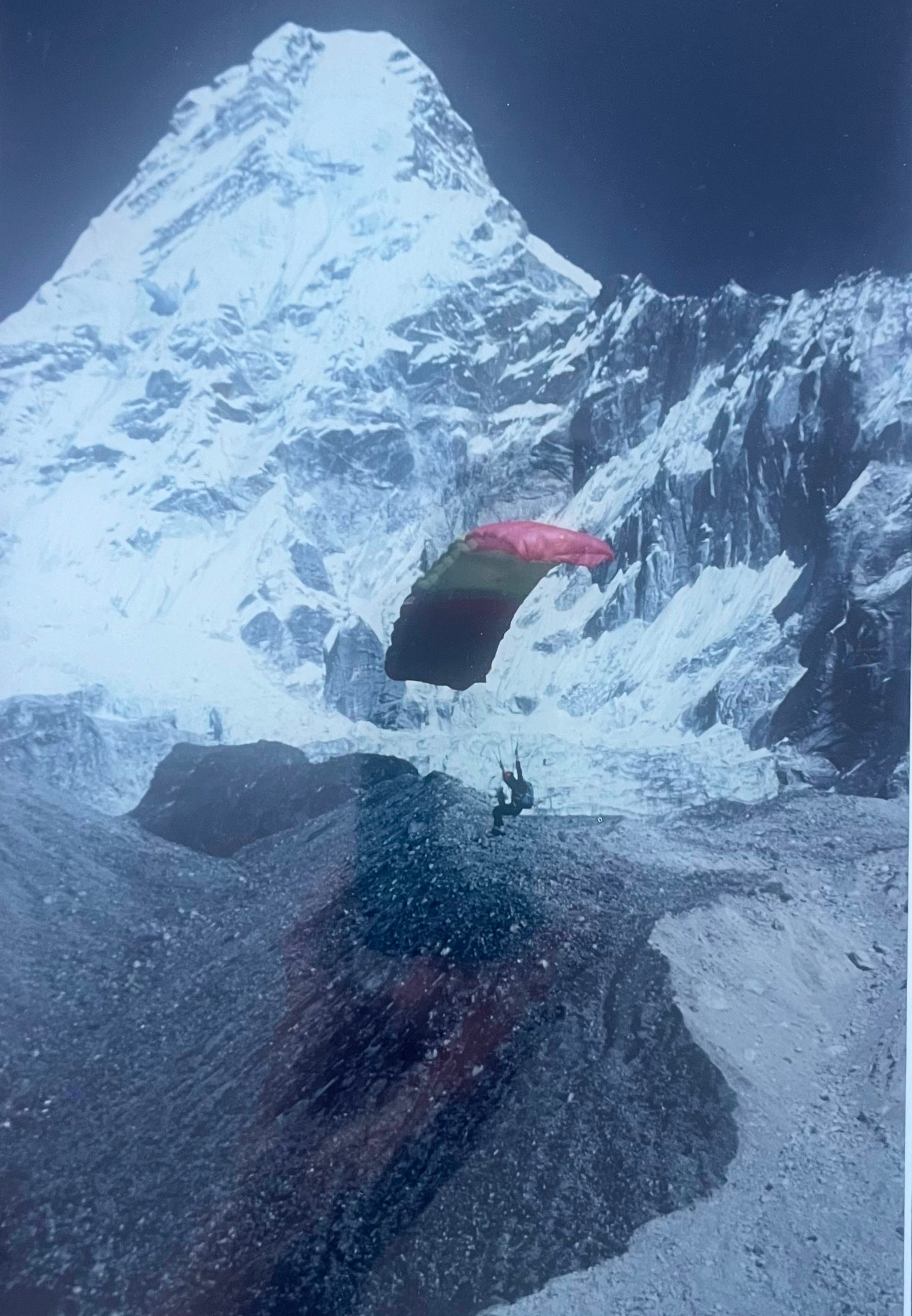
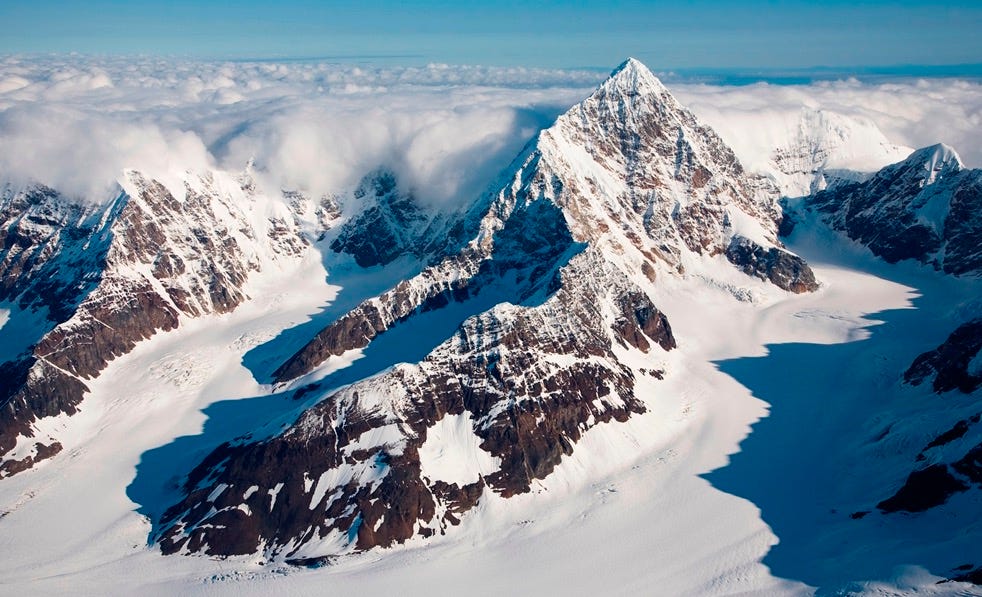
In 1989 Charlie Townsend and Dave Auble established a difficult new route on the 5,000-foot east face of Mount Russell in Alaska. After reaching the summit they were pinned down by a violent storm for five days, having already spent as long climbing the route. Food was running low, energy even lower, and a normal descent would have meant hours or even days of wading through fresh snow in serious avalanche conditions.
Both had packed lightweight paragliders - an unheard of decision at the time and even today.
Before leaving for Alaska they had spent the winter around North Conway practising launches, landings and, perhaps most importantly, learning how to kick off their crampons just before landing so they wouldn’t break an ankle.
When the weather finally cleared, Auble launched first and, as Townsend later wrote in the American Alpine Journal, he simply disappeared off the ridge, becoming “a diminishing blip” above the immense Kahiltna Glacier.
Townsend launched moments later.
Unfortunately, all their New Hampshire practice had been done without expedition packs.
As soon as he became airborne the heavy pack flipped him upside down.
He somehow regained control, landed safely beside Dave and later summed up the entire expedition with one wonderful sentence:
“Ten days on the hill. Eight minutes in the air.”
It was a remarkable adventure born from a cutting-edge idea that John Bouchard had been advocating for several years: climb light, then eliminate the dangerous descent by flying.
Every time I sit on my rock at Ascutney and watch today’s pilots effortlessly circling overhead I can’t help but smile. The sport has grown up. It’s organized, regulated and, thankfully, vastly safer than it was when we were members of the Scare Force.
My new friends on Ascutney keep telling me I should give it another go.
“It’s so much safer now,” they say.
I believe them.
But so far I’ve politely declined.
I remember the day when John rigged that glider with the string we used to close the top of the packs instead of the parachute cord and went out to test it.